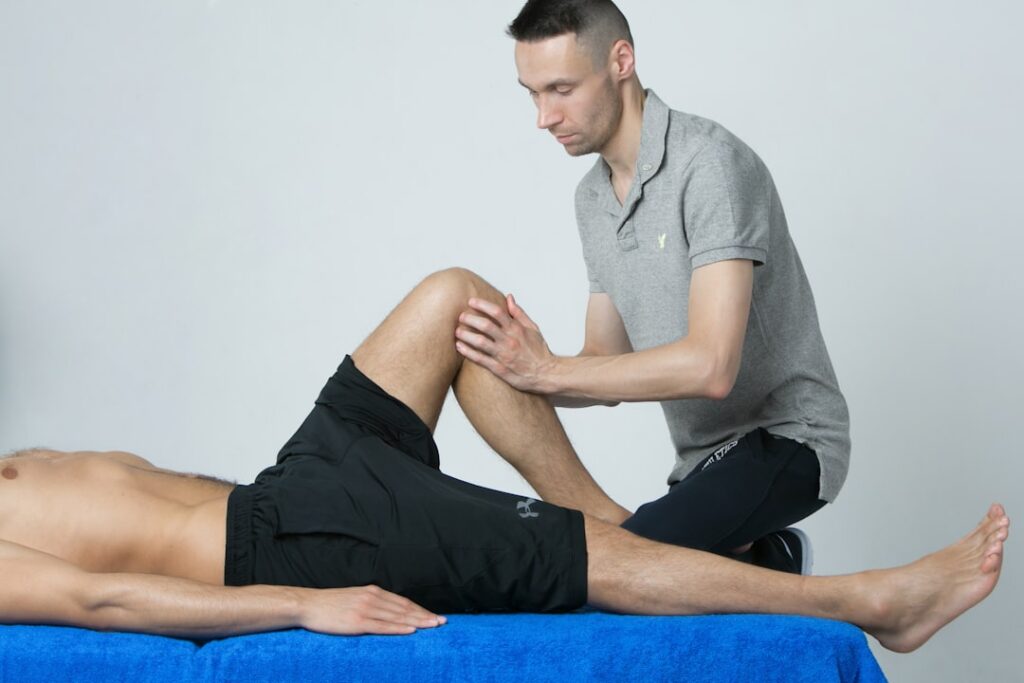

Physiotherapy is also broader than massage. Hands-on treatment may be appropriate for a particular joint or muscle, but it is rarely the entire plan. Exercise, movement coaching and advice about daily loading can address factors that keep symptoms going. A warehouse worker who develops shoulder pain while lifting cartons may need to practise shoulder control, vary lifting positions and build strength gradually. Someone with a stiff neck after desk work may need changes to screen height, short movement breaks and exercises for the upper back. The treatment should fit the diagnosis and the demands placed on the body at home, work and during sport.
Pain does not always provide a precise measure of tissue damage. It is a protective response, and its intensity can be influenced by irritation, sensitivity, fatigue and the way an activity is performed. That does not mean pain should be ignored. It means complete rest is not automatically the safest choice. A physiotherapist can identify which movement needs a temporary reduction and which activity can continue comfortably. Load management may involve shorter walks, fewer stair repetitions, lighter lifting or more recovery time between sessions. A person with an irritated knee might reduce steep stair training while continuing level walking and prescribed strengthening.
Recovery should be judged by useful function, not only by how the body feels during an appointment. Rehabilitation may target strength, joint movement, coordination, balance and confidence, with the plan adjusted as those abilities change. After an ankle injury, for example, a clinician may begin with controlled weight bearing and progress to single-leg balance or uneven-surface practice when appropriate. Proprioception describes the body’s awareness of joint position and movement, and balance work can help restore control after that awareness has been affected. Progress is rarely identical from one person to the next because the condition, general health, sleep, work demands and consistency with home exercises all matter.
Physiotherapy can suit office workers, parents, older adults, tradespeople and recreational athletes, not only people with a dramatic injury. A parent carrying a child repeatedly may need advice about alternating sides and rebuilding shoulder or trunk strength. A tradesperson with lower back discomfort may require hip mobility work, lifting practice and a staged return to heavier tasks. During assessment, it is useful to mention the movements that are avoided, not just those that hurt. A careful history may also cover previous injuries, medications, sleep and exercise habits. Those details can change the interpretation of physical test results and the choice of starting exercises.
There is no need to wait until symptoms are severe, particularly if pain keeps returning or interferes with ordinary routines. Someone searching for physio footscray can prepare by noting the first day symptoms appeared, recent changes in training or work, and what happens at night. Bringing a referral or relevant scan report can help, although the assessment still depends on the person’s current symptoms and movement. It is also useful to describe what has already been tried. A brief record on a phone can prevent the common mistake of remembering only the worst episode and forgetting the activities that consistently improve or aggravate the problem.
A practical programme is often smaller than people expect. It may include two or three exercises, instructions about repetitions, and a clear rule for progressing or reducing the workload. The clinician may record baseline movement, strength or balance so that later appointments can compare change rather than rely on memory. Manual therapy can sometimes make movement more comfortable, while active exercise helps build capacity between visits. Before booking, a person can ask about appointment length, fees, referral requirements and whether private health insurance may apply. A clinic offering general physiotherapy appointments should be able to explain the proposed assessment and access arrangements without assuming that every patient has the same circumstances.
A working diagnosis is an evidence-informed explanation of the likely source of symptoms, not necessarily a permanent label. It should be reviewed if pain spreads, strength declines, progress stalls or the response differs from what was expected. Routine physiotherapy is not the right first step for every presentation. Sudden major weakness, a serious accident, rapidly increasing swelling, loss of bladder or bowel control, or other alarming changes require prompt medical attention. For less urgent muscle, joint and tendon complaints, a structured assessment can replace guesswork with specific advice about movement, workload and the next stage of recovery.