
A lab-grown diamond is not the same as a lookalike made from glass or cubic zirconia. It is diamond material with the characteristic crystal structure and carbon composition of diamond, produced in a controlled facility rather than recovered through mining. That production still consumes energy, and its environmental profile can vary with the electricity used and the manufacturing process. Mined diamonds also pass through several supply chain stages before reaching a setter or retailer. A useful question is not which label sounds automatically responsible, but whether the seller can explain the stone’s production method and provide clear information about its origin.
Moissanite and white sapphire offer different alternatives for someone who wants a bright center stone without buying a diamond. Moissanite is silicon carbide, while white sapphire is a colorless variety of corundum, the mineral group that also includes blue and other colored sapphires. They differ in hardness, optical appearance, pricing, and maintenance. A person wearing an engagement ring while working with their hands may place particular importance on resistance to scratching and secure setting design. Someone buying occasional earrings may give more weight to color, brilliance, and cost. Each stone should be assessed on its own performance rather than described merely as a lesser diamond.
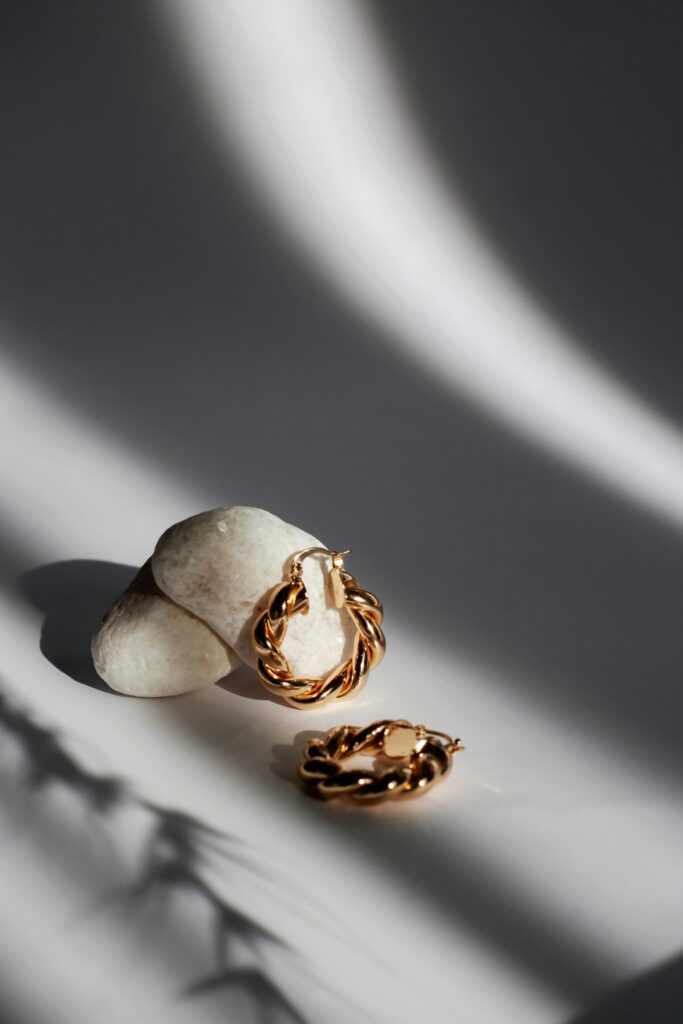
Metal deserves close attention because it often makes up most of a jewelry piece by weight. Recycled gold comes from sources such as old jewelry, production offcuts, and other recovered material that has been refined for further use. Gold can be recycled without losing its basic material properties, which can reduce the need for newly extracted gold, although refining and transport still consume energy and other resources. Recycled silver follows a similar principle. Ask whether the claim covers the entire item, the main alloy, or only a particular component. A seller who states the scope precisely is giving you more useful information than one who relies on a broad green label.
Upcycling gives an existing object or component a new function, but the finished item may still contain newly introduced material. A jeweler might remove stones from inherited earrings with a damaged setting and reset them in a pendant. An old chain could supply the links for a redesigned bracelet, while a worn clasp is replaced for safety. Before work begins, a practitioner will often inspect the metal, test how securely stones are held, and record which parts can be reused. New solder, wire, findings, or a replacement setting may be necessary. Ask what is being retained and what is being added, especially if the description suggests that the whole piece is recovered.
Long service is one of the most practical measures of a jewelry purchase. A fragile ring that must be replaced repeatedly may use fewer preferred materials at the start yet create more waste over its life than a repairable piece worn for decades. Examine the way stones are secured, whether the metal suits daily use, and whether the design can be resized or repaired. A small habit can prevent expensive rework: remove delicate jewelry before swimming, cleaning, gardening, or strenuous work, and store each piece separately so chains do not knot and harder stones do not scratch softer metal. For material-specific maintenance, consult care guidance for jewelry before applying a household cleaner.
Ethical and environmental claims become more useful when their boundaries are clear. Traceability refers to the ability to follow a material through stated supply chain stages. Certification indicates that an outside body has assessed defined requirements, but neither term automatically describes every metal, stone, worker, or process associated with a finished piece. Read the product description and any accompanying sourcing document rather than assuming a certificate covers the entire item. Ask whether the metal content is known, how the stone was produced or sourced, where the piece was made, and what repair service is available. Packaging also deserves a question, since a responsible material claim does not tell you how the item was packed or shipped.
Before placing an order, write down the details that matter most for the intended wearer and compare the answers across pieces. Confirm the metal alloy, the proportion or source of recycled content, the identity and production method of the center stone, and whether replacement parts can be obtained later. If a design uses inherited stones, ask the jeweler to note their condition and any limits on resetting them. Check the return and resizing terms before work starts, since an alteration can affect the setting or final fit. For a broader reference on sustainable jewelry, use the information alongside these product-specific questions rather than treating the phrase itself as proof.