
Pain intensity is not a precise damage meter. The nervous system can become more sensitive when sleep is poor, stress is high or activity changes suddenly, so strong pain does not automatically indicate serious tissue injury. During an appointment, the physiotherapist may ask when symptoms began, review previous injuries and check movements that reproduce or reduce discomfort. Gentle resistance tests can compare strength and control on both sides. Reading about physio hawthorn services may help you think about the type of assessment you need, but the examination should guide the plan rather than a generic exercise sheet.
Activity-related pain often reflects a change in workload. A recreational runner might move from two short runs each week to five sessions, then develop pain around the outside of the knee. Stopping may calm it, but returning immediately to the same schedule can bring the symptoms back. Load management involves adjusting duration, pace, hills, surfaces and recovery days so the body has time to adapt. A practitioner may ask the runner to record sessions in a phone note or training diary, then increase one variable at a time. That small habit makes it easier to identify what the knee tolerates.
Pain can also be felt away from its source. Irritation in the lower back may contribute to aching in the buttock or leg, while neck movement can influence some shoulder or arm symptoms. This does not mean every ache comes from the spine. It means an assessment may need to include nearby joints, muscle function and nerve sensitivity. A physiotherapist can test related movements and explain which exercises are reasonable to practise. Numbness, increasing weakness, loss of coordination or rapidly worsening symptoms should not be treated as a reason to push harder. They warrant timely clinical review.
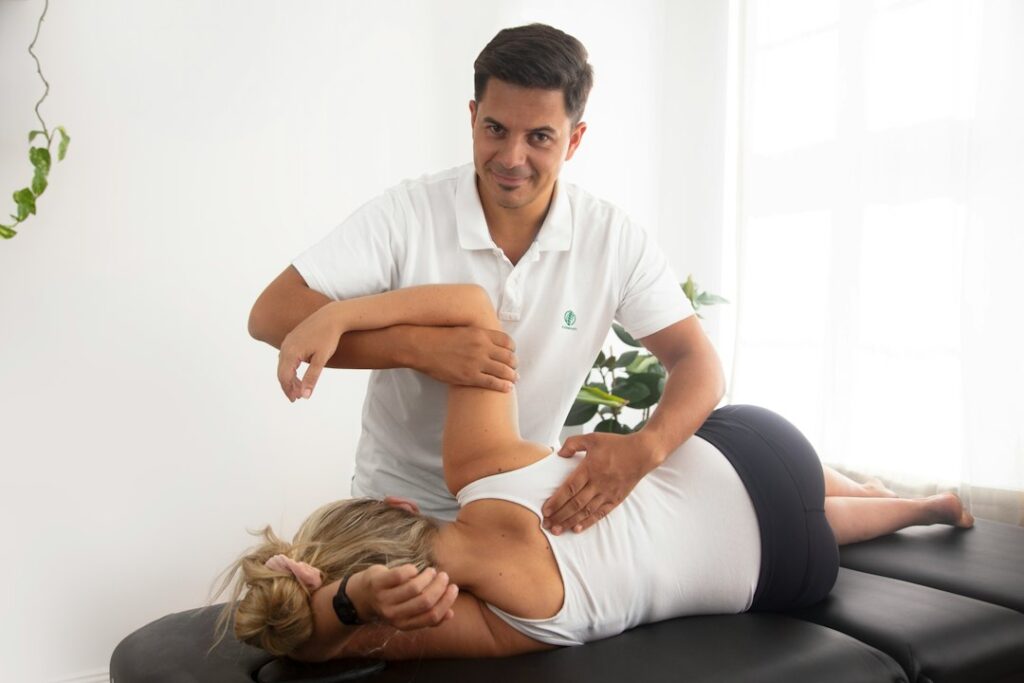
Hands-on treatment can be useful when it supports a clear movement goal. Joint mobilisation uses controlled movement to reduce stiffness or improve comfort, while soft tissue techniques apply pressure to muscles and surrounding connective tissue. The benefit may be temporary, and that is not necessarily a problem if it creates a better opportunity to practise. Someone with a stiff shoulder, for example, might use the improved comfort after treatment to work on reaching, dressing or placing an object on a shelf. The active exercise helps carry that change into an ordinary task rather than leaving it in the treatment room.
After an ankle sprain, the joint may feel fine while walking on a smooth footpath but less reliable when stepping off a kerb or turning quickly. Proprioception is the body’s awareness of joint position and movement, and rehabilitation can target this sense through balance and control exercises. Early work might involve standing near a bench with both feet stable. Later tasks can include single leg balance, reaching in different directions or controlled changes of direction. Progress should be based on steady form and a manageable response afterwards, not on completing a large number of repetitions.
Treatment needs to fit the person who will use it. A laptop worker with neck pain may benefit from moving away from the screen regularly, changing position before stiffness builds and raising the screen so prolonged downward viewing is reduced. A new chair alone will not replace those habits. A parent with wrist pain may need to practise lifting a child with the forearm supported, vary which side carries the load and adjust feeding positions. The physiotherapist may also ask to see a typical work setup or discuss the exact task that causes trouble, because small details often determine whether advice is practical.
A plan should include clear instructions for the days between appointments, including how often to exercise, what level of discomfort is acceptable and what response means the activity should be reduced. Keep the exercise instructions beside the work computer or save them with the appointment notes so they are easy to check rather than relying on memory. Seek assessment if pain continues to worsen, limits ordinary activities, follows an injury with substantial swelling or is accompanied by numbness or weakness. A local physiotherapy assessment can examine the relevant movements and relate rehabilitation to the work, sport and daily tasks you need to perform.